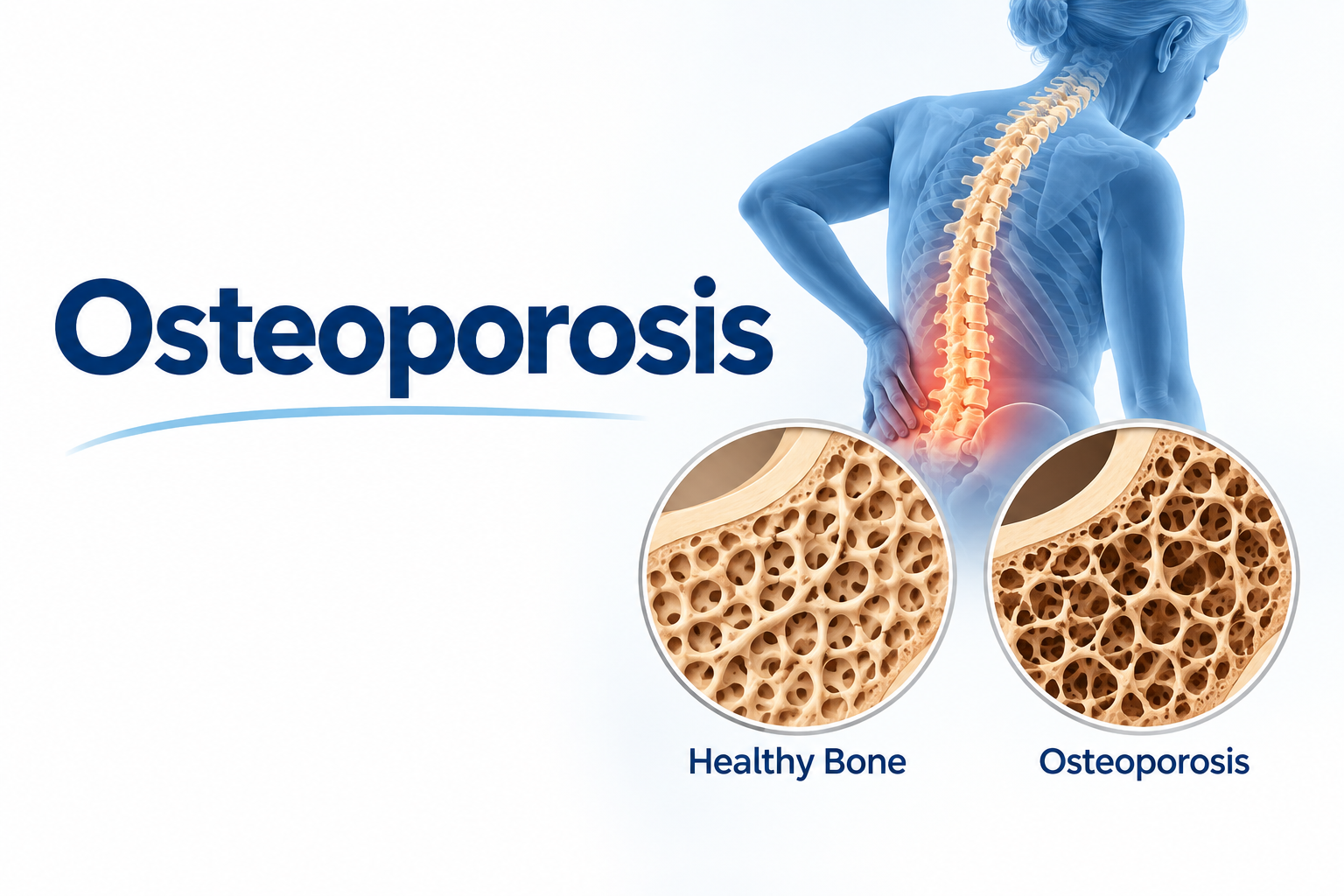
Osteoporosis is a common bone disease in which bone mineral density and bone mass decrease, while the structure and strength of bone may also deteriorate. As a result, bones become weaker and more fragile, increasing the risk of fractures.
Osteoporosis is often called a “silent disease” because it may develop without obvious symptoms. Many people discover they have osteoporosis only after experiencing a fracture, sometimes following a minor fall or normal daily activity.
What Is Osteoporosis?
Healthy bones are not simply hard, inactive structures. They are living tissues that continuously change and repair themselves through a process called bone remodeling.
Bone contains a strong framework made largely from collagen and minerals, especially calcium and phosphate. The outer layer is called cortical or compact bone, while the inner portion contains lighter, lattice-like trabecular or spongy bone.
When bone remodeling remains balanced, old bone is removed and replaced with new bone. In osteoporosis, this balance is disturbed. More bone may be removed than is replaced, causing progressive loss of bone mass and strength.

How Does Osteoporosis Occur?
Understanding bone remodeling makes it easier to understand how osteoporosis develops.
Step 1: Old Bone Is Removed
Specialized cells called osteoclasts break down and remove old or damaged bone.
This process is called bone resorption.
Osteoclasts create small areas where old bone tissue and minerals are removed.
Step 2: New Bone Is Formed
After bone resorption, another group of cells called osteoblasts begins producing new bone.
Osteoblasts first produce a collagen rich framework. Minerals are then deposited into this framework, making the new bone stronger and harder.
Step 3: Bone Remodeling Normally Remains Balanced
In healthy adults, the amount of bone removed and the amount of bone formed are relatively balanced.
Bone resorption ≈ Bone formation
This balance allows bones to maintain their strength.
Osteocytes, which are mature bone cells embedded within bone, also help regulate the remodeling process.
What Happens in Osteoporosis?
In osteoporosis, the bone remodeling process becomes unbalanced.
The process can be summarized as:
Increased bone resorption and/or reduced bone formation
↓
More bone is removed than replaced
↓
Bone mineral density decreases
↓
Trabecular bone becomes thinner and more fragile
↓
Cortical bone may also become thinner
↓
Overall bone strength decreases
↓
Risk of fracture increases
This imbalance between osteoclast activity and osteoblast activity is one of the central processes involved in osteoporosis.
Why Does Bone Loss Increase With Age?
During childhood and adolescence, the body generally forms bone faster than it removes it. This allows bones to become larger, heavier and stronger.
Peak bone mass is generally reached by early adulthood.
Later in life, bone remodeling gradually changes. Bone removal can become greater than bone formation. Over time, this imbalance can result in significant bone loss, particularly when other risk factors are present.
Therefore:
Young age → Bone formation > Bone breakdown
Healthy adulthood → Bone formation ≈ Bone breakdown
Aging/osteoporosis → Bone breakdown > Bone formation
Why Is Menopause Important in Osteoporosis?
Hormones play an important role in maintaining bone strength.
One of the most important changes occurs in women around menopause, when estrogen levels decrease.
Estrogen normally helps regulate bone turnover. When estrogen levels fall, bone resorption can increase, resulting in faster bone loss.
The simplified process is:
Menopause
↓
Estrogen decreases
↓
Bone resorption increases
↓
Bone loss accelerates
↓
Bone mineral density decreases
↓
Fracture risk increases
Osteoporosis can also occur in men, particularly with increasing age, low sex hormone levels, certain medical conditions, or medications that affect bone health.
Causes and Risk Factors for Osteoporosis
Osteoporosis usually develops from a combination of risk factors rather than one single cause.
1. Increasing Age
As people age, bone formation becomes slower and bone loss can accelerate.
2. Menopause and Low Estrogen
The reduction in estrogen after menopause can accelerate bone loss.
3. Low Calcium Intake
Calcium is an essential mineral for maintaining bone structure.
When the body does not receive enough calcium, it can draw calcium from bone stores, contributing to bone loss over time.
4. Vitamin D Deficiency
Vitamin D is important because it helps the intestine absorb calcium.
Insufficient vitamin D can interfere with maintaining adequate calcium availability for bone health.
5. Physical Inactivity
Low physical activity and prolonged inactivity can contribute to bone loss and may also reduce muscle strength and balance, increasing the risk of falls.
6. Smoking
Smoking is associated with increased risk of osteoporosis and fractures.
7. Excessive Alcohol Consumption
Chronic heavy alcohol use is an important risk factor for osteoporosis.
8. Family History
Having a parent with osteoporosis or a history of hip fracture can increase the risk.
9. Low Body Weight
People with a small or slender body frame may have less bone mass to lose.
10. Certain Medical Conditions
Certain medical conditions affecting hormones, nutrition, gastrointestinal function, joints and other body systems can increase osteoporosis risk.
11. Certain Medications
Long-term use of some medications can contribute to bone loss. Examples include glucocorticoids, certain antiepileptic medications and some cancer related treatments.
Signs and Symptoms of Osteoporosis
Osteoporosis often has no symptoms in its early stages.
A person can gradually lose bone density without feeling pain.
For this reason, osteoporosis is often described as a silent disease.
Symptoms may appear when a fracture occurs.
Possible signs include:
- Fracture after a minor fall
- Hip fracture
- Wrist fracture
- Vertebral or spinal fracture
- Back pain
- Loss of height
- Stooped or hunched posture
- Difficulty maintaining normal mobility after fractures
Vertebral fractures can sometimes occur during ordinary activities when bones have become extremely fragile.
Common Fracture Sites in Osteoporosis
Although osteoporosis can affect any bone, fractures commonly occur in the hip, spine and wrist.
Hip Fracture
A hip fracture can significantly affect mobility and independence, particularly in older adults.
Spinal Fracture
Weak vertebrae can collapse, causing back pain, loss of height and kyphosis.
Wrist Fracture
A fall onto an outstretched hand can cause a wrist fracture in people with fragile bones.
How Is Osteoporosis Diagnosed?
The most commonly used test for measuring bone mineral density is a DXA or DEXA scan.
DXA stands for Dual-Energy X ray Absorptiometry.
It is a quick, painless and non-invasive test that commonly measures bone mineral density at the:
- Hip
- Spine
DXA can help:
- Detect low bone density
- Diagnose osteoporosis
- Estimate fracture risk
- Monitor response to treatment
T Score and Bone Density
For postmenopausal women and men in the appropriate age group, clinicians commonly use the T score to interpret DXA results.
A T score of −2.5 or lower at an appropriate measured site is generally consistent with osteoporosis.
The result should always be interpreted together with the person’s age, fracture history and overall clinical risk.
How Is Osteoporosis Managed?
The main goals of osteoporosis management are to:
- Reduce further bone loss
- Maintain or improve bone strength
- Reduce the risk of fractures
- Prevent falls
- Treat underlying causes
- Maintain mobility and independence
Management usually combines nutrition, exercise, fall prevention, lifestyle changes and medication when indicated.
1. Calcium and Vitamin D
Adequate calcium and vitamin D are important components of bone health.
Calcium
Good dietary sources include:
- Milk and other dairy products
- Calcium fortified foods
- Certain leafy green vegetables
- Sardines and salmon with bones
- Calcium-fortified plant-based products
Vitamin D
Vitamin D helps the body absorb calcium from the intestine.
Sources include:
- Sunlight exposure
- Dietary sources
- Supplements when clinically appropriate
The required amount varies according to age, diet, medical conditions and individual circumstances.
2. Exercise for Osteoporosis
Physical activity is an important part of bone health management.
Depending on an individual’s health and fracture risk, exercise may include:
- Weight bearing activities
- Resistance or strength training
- Balance exercises
- Muscle strengthening exercises
- Exercises prescribed by a physiotherapist
Exercise can help improve muscle strength, balance and physical function, which can reduce fall risk.
People with established osteoporosis, particularly those with previous fractures, should receive individualized exercise advice.
3. Fall Prevention
Fall prevention is extremely important because weak bones are more likely to fracture after a fall.
Fall prevention measures can include:
- Keeping floors free of obstacles
- Improving lighting
- Using appropriate footwear
- Reviewing medications that may cause dizziness
- Improving muscle strength and balance
- Using walking aids when clinically recommended
- Addressing vision problems
4. Stop Smoking and Limit Alcohol
Smoking is associated with increased risk of osteoporosis and fractures.
Heavy alcohol consumption can also negatively affect bone health.
Avoiding smoking and limiting alcohol are therefore important components of osteoporosis prevention and management.
5. Osteoporosis Medications
Some people with osteoporosis or a high risk of fracture need medication.
The choice depends on factors such as:
- Age
- Bone density
- Previous fractures
- Overall fracture risk
- Other medical conditions
- Current medications
- Kidney function and other clinical considerations
Bisphosphonates
Bisphosphonates reduce bone resorption and can help preserve bone density and reduce fracture risk.
RANKL Inhibitors
These medications reduce osteoclast mediated bone resorption.
Anabolic or Bone Building Treatments
Some medications stimulate bone formation and may be used in people with severe osteoporosis or very high fracture risk.
Other Treatment Options
Depending on the individual patient, other treatments may include selective estrogen receptor modulators, hormone therapy in selected postmenopausal women, or other specialized therapies.
Medication selection should be made by a qualified healthcare professional based on the individual’s fracture risk and medical history.
What Happens If Osteoporosis Is Not Managed?
Untreated osteoporosis can progressively weaken bones and increase the risk of fractures.
A fracture can lead to:
- Pain
- Reduced mobility
- Loss of independence
- Difficulty performing daily activities
- Loss of height
- Spinal deformity
- Complications following major fractures, particularly hip fractures
For this reason, early identification and appropriate management of osteoporosis are important.
© 2026 Amina Rehman. All Rights Reserved.


Leave a Reply