Meta Description
Asthma is a chronic inflammatory lung disease causing wheezing, cough, shortness of breath, and chest tightness. Learn its causes, triggers, symptoms, diagnosis, and advanced treatments.
Introduction
Asthma is a chronic inflammatory disease of the airways characterized by reversible airway obstruction, bronchial hyperresponsiveness, and airway inflammation. It affects people of all ages and can significantly impact quality of life if uncontrolled.
Types of Asthma
- Allergic (Atopic) Asthma – Triggered by allergens like dust mites, pollen, or pets. Mediated by IgE antibodies.
- Non-Allergic Asthma – Triggered by irritants, infections, or exercise. Usually develops in adults.
- Exercise-Induced Asthma – Symptoms occur during or after vigorous exercise due to airway cooling.
- Occupational Asthma – Caused by workplace exposures like chemicals or dust.
- Drug-Induced Asthma – Triggered by medications such as NSAIDs or beta-blockers.
Causes and Risk Factors
- Genetic Predisposition: Family history of asthma or allergies
- Environmental Triggers: Dust, pollen, pet dander, smoke, pollution
- Respiratory Infections: Viral infections like RSV or influenza
- Lifestyle Factors: Obesity, stress, sedentary lifestyle
- Occupational Exposure: Chemicals, dust, fumes
Pathophysiology
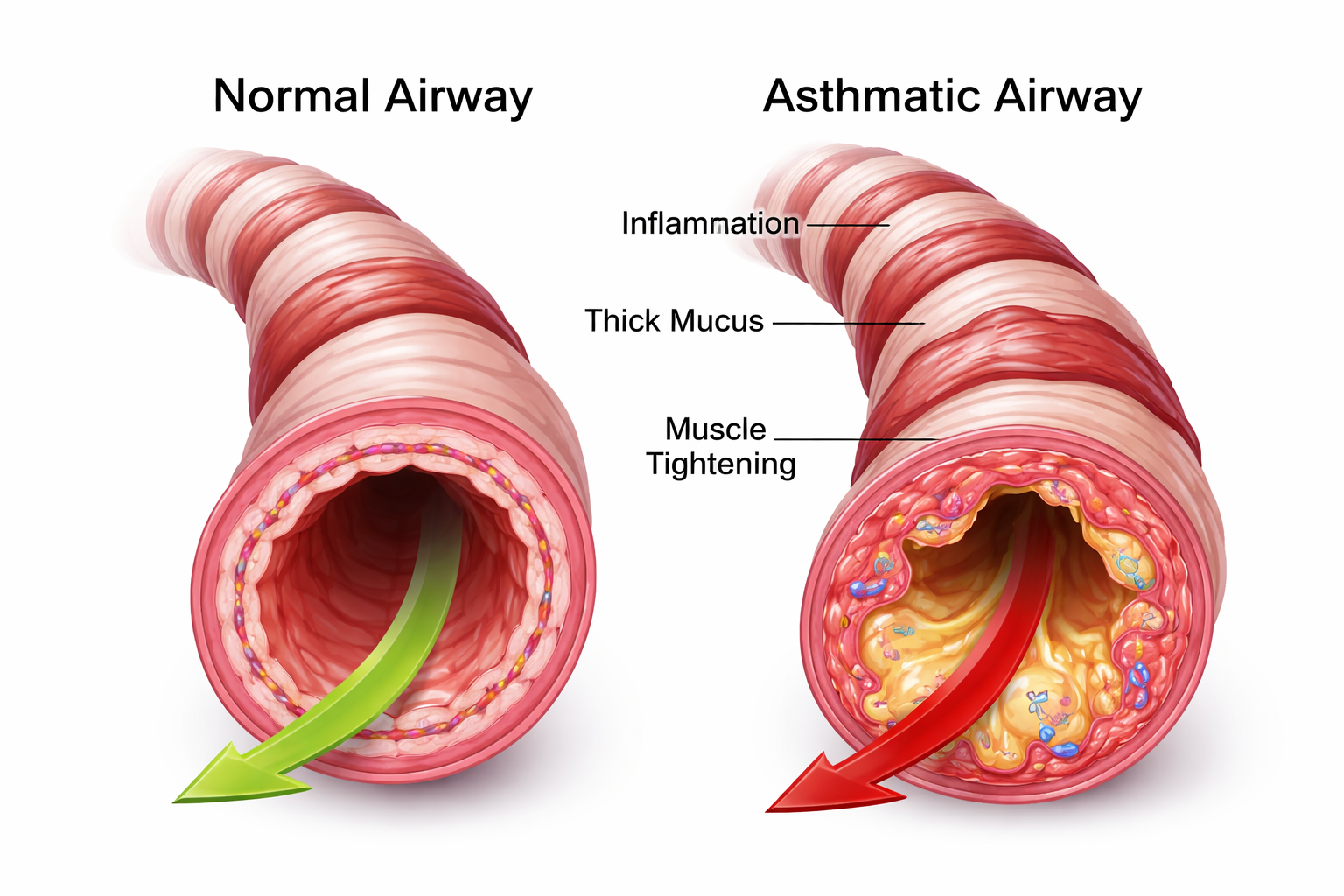
Asthma results from airway inflammation, smooth muscle contraction, and mucus overproduction:
- Immune Cells Involved: Mast cells, eosinophils, T-helper 2 lymphocytes, dendritic cells
- Key Mediators: Histamine, leukotrienes, prostaglandins, cytokines (IL-4, IL-5, IL-13)
- Airway Remodeling: Thickened basement membrane, smooth muscle hypertrophy, goblet cell hyperplasia
Result: Narrowed airways → airflow obstruction → wheezing, shortness of breath, chest tightness
Symptoms of Asthma
- Wheezing (high-pitched breath sounds)
- Shortness of breath, especially at night or early morning
- Cough (dry or productive)
- Chest tightness
- Severe symptoms: tachypnea, use of accessory muscles, cyanosis, or silent chest

Triggers
- Allergens: pollen, dust, pet dander, molds
- Irritants: smoke, pollution, chemicals
- Exercise or cold air
- Viral respiratory infections
- Medications: NSAIDs, beta-blockers
Diagnosis
- Clinical History: Symptom pattern and triggers
- Physical Exam: Wheezing, prolonged expiration, hyperinflated chest
- Pulmonary Function Tests: Spirometry, bronchodilator reversibility
- Peak Flow Monitoring: Daily variability assessment
- Allergy Testing: Skin prick or serum IgE
- Additional Tests: Chest X-ray, FeNO for airway inflammation
Treatment
a) Relief (Acute)
- Short-acting beta-agonists (SABA) like Salbutamol (Ventoline)
- Anticholinergics (e.g., Ipratropium) in severe cases
b) Maintenance (Controller)
- Inhaled corticosteroids (ICS) like Pulmicort (Budesonide)
- Long-acting beta-agonists (LABA) combined with ICS
- Leukotriene receptor antagonists (e.g., Montelukast)
- Biologics for severe asthma: Omalizumab, Mepolizumab
c) Non-Pharmacological Measures
- Avoid triggers (dust, smoke, allergens)
- Maintain healthy weight and exercise moderately
- Breathing exercises (Buteyko or diaphragmatic breathing)
- Vaccinations against flu and pneumonia
d) Emergency Management (Status Asthmaticus)
- High-dose nebulized bronchodilators
- IV corticosteroids
- Oxygen therapy
- ICU care if unresponsive
Complications in Ashtma
- Airway remodeling → permanent obstruction
- Recurrent infections due to mucus retention
- Pneumothorax or atelectasis (rare)
- Hypoxia and respiratory failure
- Medication-related complications (oral thrush, adrenal suppression)
Nursing Considerations
- Assess respiratory rate, oxygen saturation, and peak flow
- Educate patients on correct inhaler technique
- Identify and document triggers
- Monitor for side effects of long-term corticosteroids
- Develop an asthma action plan for exacerbations’
NSAID Avoidance in Asthma
NSAIDs can significantly affect asthma patients due to the inhibition of COX-1, leading to decreased protective prostaglandins and increased leukotriene production. This biochemical shift results in bronchospasm, airway inflammation, mucus overproduction, and nasal symptoms, potentially triggering severe asthma attacks. Awareness, avoidance, and appropriate alternative medications are essential for preventing these reactions in sensitive individuals. Proper patient education and careful monitoring can significantly reduce the risk of NSAID-induced asthma exacerbations.
Prognosis
- Good control is achievable with early recognition, proper medication, and trigger avoidance
- Poorly controlled asthma leads to frequent attacks, hospitalizations, and reduced quality of life
© 2026 Amina Rehman – All Rights Reserved
This content is original, copyrighted, and owned by Amina Rehman. Unauthorized reproduction, distribution, or publication without permission is prohibited.


Leave a Reply to Bronchospasm: Complete Pathophysiology, Causes, Symptoms, Diagnosis & Advanced Treatment Guide – amamedicoCancel reply